Draws · UK
models re-scored after every event · public ledger

Models that learn from the past, and are scored in public.

Probabilica builds statistical models for real-world events, publishes every prediction before the event with a cryptographic fingerprint, and then measures it against the right benchmark. Nobody edits a prediction afterwards - not even us.

8 models1,980 events ingestedwalk-forward evaluationSHA-256 ledger18+ where required
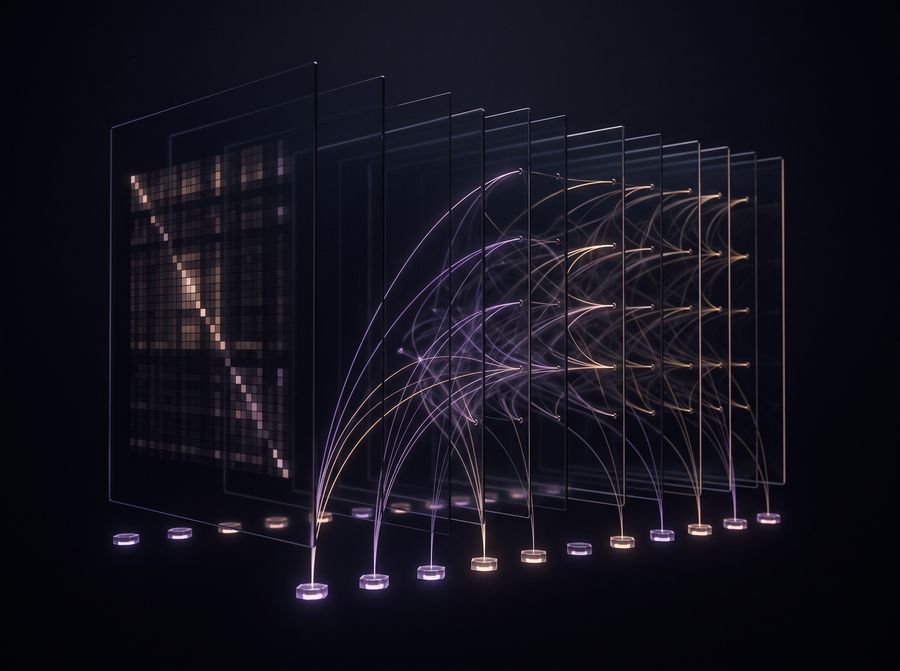
Attention paths rising through the layers of a transformer network
fig. 1 - attention paths across layers; brightness is weight, not decoration
The distinction that decides everything

Two kinds of events. Two honest answers.

Not every future is equally unknowable. Before a model is allowed to say anything, we classify the event - because the class determines what a good model can achieve and what it must be compared against.

Turbulent flow - structureless chaos
Class I · memoryless

Random draws

Mechanical draws - lottery machines, dice, anything with a certified random generator - are independent and identically distributed. Every outcome carries the same probability every time, and the past contains no information about the future. That is a mathematical property, not an opinion.

Here a model cannot beat chance, and we say so on every page. What the models produce is structure and entertainment: consistent published methods, and a scoreboard benchmarked against a Monte Carlo luck band - the range where a thousand random players land. Staying inside that band is the expected result.
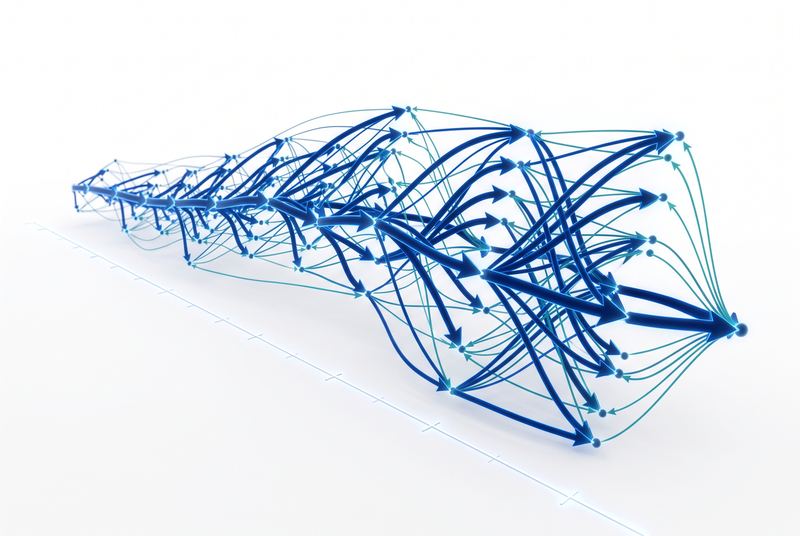
A directed network of repeated encounters with a dominant direction
Class II · history-bearing

Events with structure

Sport, weather, traffic, demand, elections - these carry information forward. When a leading team meets a struggling one and has won every previous encounter, the outcome is not a coin flip: base rates, head-to-head history, home advantage, rest days and squad availability all shift the distribution, and a model that reads them is genuinely informative.

Informative is not certain. Upsets happen, and a model that claims otherwise is selling something. So Class II models are judged against demanding baselines - historical base rates and the crowd's own forecast - with calibration measured over hundreds of events, not celebrated after one good weekend.

The rule we apply to ourselves: a prediction is worth nothing until it is published before the event and compared with what an unskilled forecaster would have achieved. Everything we build follows that order.
Method

Honest by construction.

01

Published before the event

After each result the engine re-scores every model on the full history and writes the next predictions to an append-only ledger with a time-stamp and a SHA-256 fingerprint. Anyone can re-hash it.

02

Walk-forward, never hindsight

Every historical prediction is made using only the data available before that event. A backtest that peeks at the future is not evidence, and we never tune predictions on the score.

03

Benchmarked, then published

Class I against a Monte Carlo luck band, Class II against base rates and the crowd. The comparison is shown whether it flatters the model or not.

Products

One engine, one arena at a time.

Live · United Kingdom

Probabilica Draws

Class I. Eight models against a national draw twice a week, a public leaderboard against the luck band, the leader's prediction free. Picks sealed before every draw.

In preparation

Further arenas

More draw markets in other countries, then Class II events where history carries real signal - scheduled sport first. Same engine, same ledger, different benchmark.